Skip to contentArticle 14 reporting has applied since 11 September 2026. See the worked example and get the free 4-page overview.
See the kit

Templates and guides for the EU Cyber Resilience Act

Editable Word and Excel templates, practical guides and a completed example for a smart thermostat. Use them to record scope decisions, link risks to requirements and evidence, and prepare Article 14 reports.

The kit organises the work. Your team implements and verifies the security measures.

See the kit
Get the free overviewFree PDF, 4 pages. Polar emails you the download link.
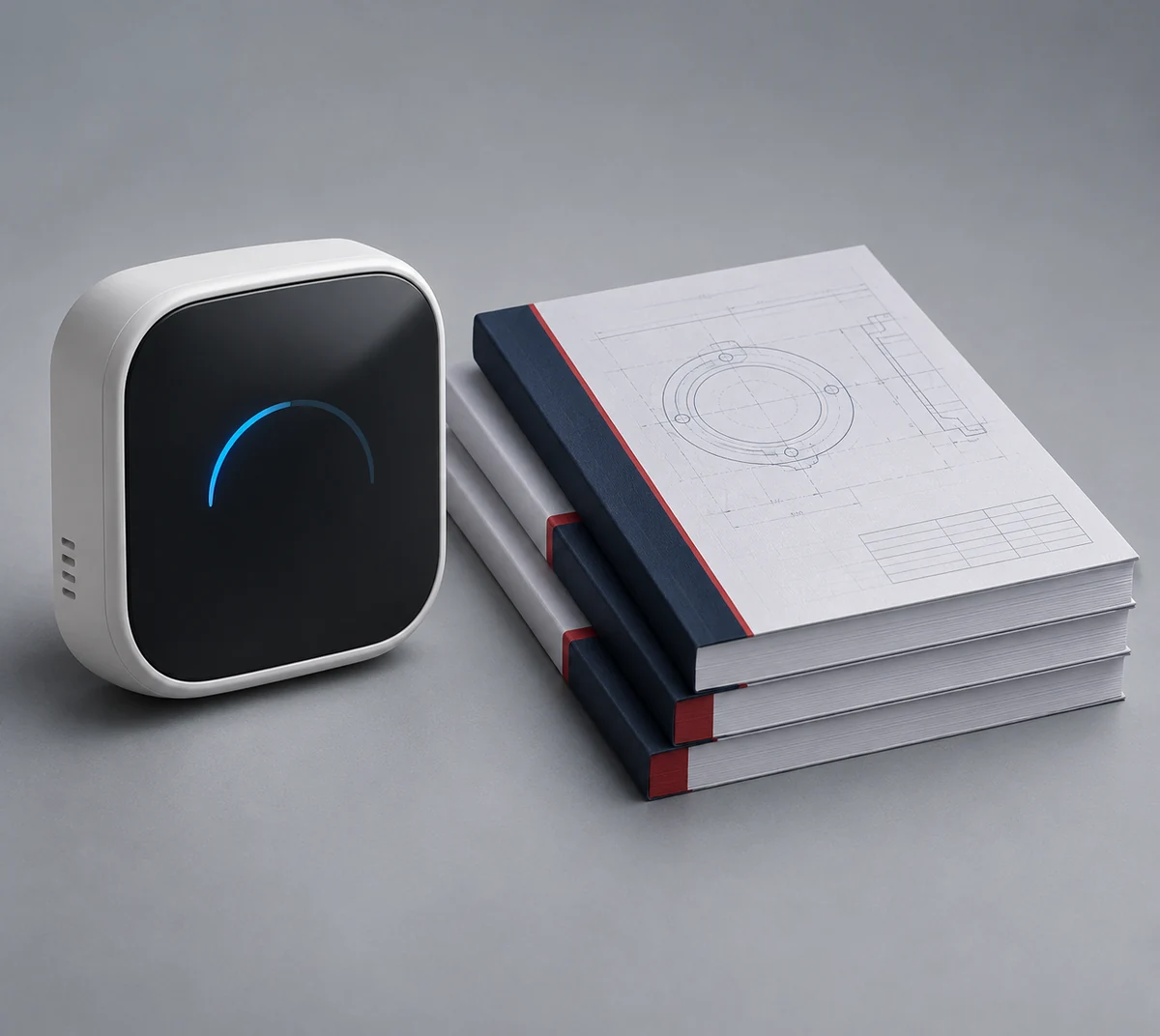
Illustration of the Lumora TH-200 smart thermostat and its kit documents.64 files · Word, Excel, PDF
  • Each template ends with a table of the provisions of Regulation (EU) 2024/2847 it helps you document.
  • Checked against the regulation, Commission guidance and ENISA's reporting FAQ on 5 October 2026.
  • Written by a product cybersecurity architect who has worked on risk assessment, supplier requirements, secure update and PKI design, and evidence for regulatory approval.

One deadline has passed. The next one is set.

The CRA applies in stages. Reporting is already mandatory, full conformity follows in December 2027, and the duties then run for as long as you support the product.

  1. 11 September 2026

    Reporting obligations

    For products in the CRA's scope, including those placed on the market before 11 December 2027: an early warning without undue delay and in any event within 24 hours of becoming aware of an actively exploited vulnerability or a severe incident, a notification within 72 hours, then a final report (Art. 14, Art. 69(3)).

  2. 11 December 2027

    Full conformity

    Products placed on the EU market must meet Annex I, pass conformity assessment and carry the CE marking.

  3. From placing on the marketOngoing

    Support period

    Handle vulnerabilities for the support period, which is at least five years unless the product is expected to be in use for less (Art. 13(8)). Keep the technical documentation and the EU declaration of conformity for at least ten years after placing on the market, or for the support period if that is longer (Art. 13(13)).

What you get

  • 27 editable templates (22 Word, 5 Excel), each with a table of the CRA provisions it helps you document
  • For Article 14 reporting: a playbook (PDF and Word), notification templates and a case file
  • 9 guides that explain what each file is for, why the CRA asks for it and who fills it in
  • A worked example for a fictional smart thermostat, with 26 completed files
  • Free updates until at least 31 December 2027

Inside the kit

Follow one decision through the documents.

The worked Lumora example connects the scope assessment, risk register and evidence matrix. See how the entries relate before you start your own.

How the documents connect

  1. Scope

    M01–M02

    Record the product and the scope decision.

  2. Risk

    R-01

    Identify the risk that needs treatment.

  3. Control

    EPR-04

    Record signed updates as the treatment.

  4. Evidence

    LUM-TST-OTA

    Link the architecture, tests and interface records.

ScopeM01–M02

Start with the product.

The scope assessment records what the product does and why it falls within the CRA.

EX_M01-M02_Scope_Role_Classification_Lumora_TH-200.xlsx · 1 Scope · A1:E12

Excerpts from the fictional Lumora TH-200 worked example included in the kit. Product files are in English. Select an image to enlarge it.

Your files stay on your systems

The kit is a set of Word, Excel and PDF files that you fill in on your own systems. No cloud deployment is required, and the kit does not require you to upload product or vulnerability data to us.

No upload to us

There is no account to create. Source code, SBOMs, unpatched vulnerabilities and incident details stay on the systems you choose.

No cloud deployment required

Nothing to install, host or connect to your network. The files open in Microsoft Office or LibreOffice.

Keep editable copies on your own systems

The technical documentation and the EU declaration of conformity must be kept for at least ten years after the product is placed on the market, or for the support period if that is longer (Art. 13(13)). Your completed files can stay in your own document control for that time.

Pay once

One price per licence. No subscription and no fees per product or per user. Free updates until at least 31 December 2027.

What the kit does not do: it does not scan your code or monitor vulnerabilities. Keep the tools you already use for that; the kit shows which evidence the CRA expects from them.

When you buy or request the free overview, Polar, our Merchant of Record, processes your order details. See Privacy.

Compare the options:Consultant, platform or template kit: which one still works for you in five years?

From scope to CE marking

  1. 1Scope and class
  2. 2Reporting playbook
  3. 3Programme plan
  4. 4Gap assessment
  5. 5Vulnerability handling and suppliers
  6. 6Risk assessment and Annex I evidence
  7. 7Other EU laws
  8. 8Technical file, declaration and CE marking
  9. 9After sale

See a completed set of example documents

26 of the 27 templates are filled in for the Lumora TH-200, a fictional smart thermostat: risk register, Annex I evidence matrix, technical documentation, EU declaration of conformity and an Article 14 reporting exercise. The one left blank is the authorised representative mandate, because the fictional manufacturer is established in the EU. Start with the free 4-page overview.

Scope decision: in scope, manufacturer, default class, Module A

Risk assessment: 12 risks, from firmware tampering to loss of heating in winter; every completeness check at zero

Annex I evidence matrix: 22 requirements, each with its proof

Get the free overviewFree PDF, 4 pages. Polar emails you the download link.

The 26 filled example files come with the full kit.

Lumora Home Technologies GmbH and Lumora TH-200 are fictional.

Özer Koray Akdemir

Written by a practitioner

Özer Koray Akdemir is a product cybersecurity architect. He built a product cybersecurity function for connected products while the regulation that required it was still new. The work covered threat analysis and risk assessment, cybersecurity requirements for suppliers, the architecture for signed over-the-air updates and their keys, and the evidence for the approval audit. Before that he worked for many years on cryptographic systems and secure communications. The kit turns that experience into documents your team can complete.

About the author →